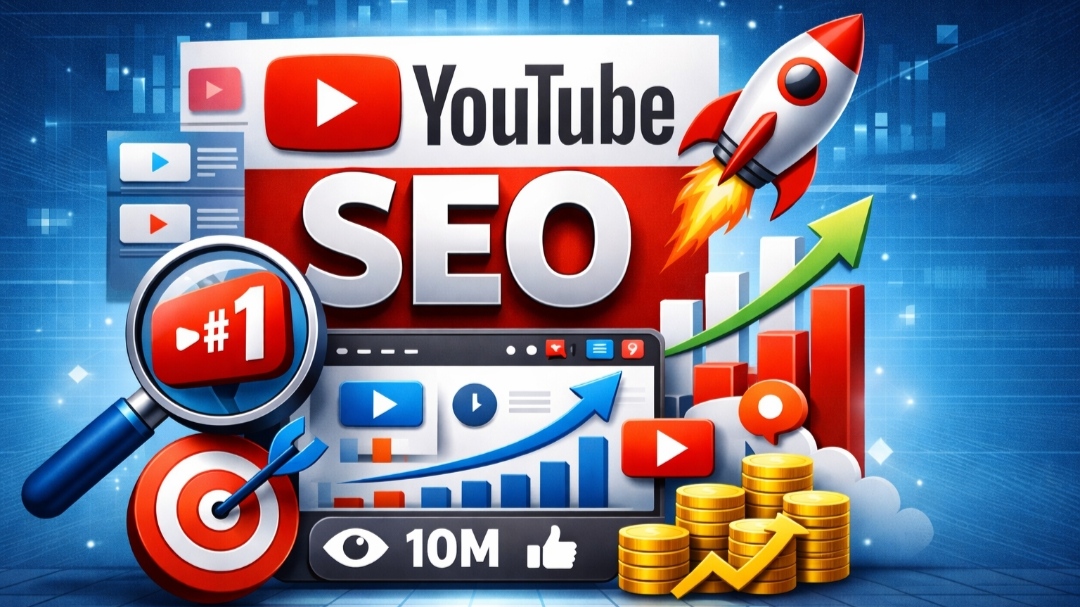
Getting your YouTube videos to rank on the front page of Google has become much more advanced than it was a few years ago. Earlier, creators could rank videos simply by repeating keywords in titles, descriptions, and tags. But today, Google and YouTube use advanced AI-based search systems that focus on content quality, viewer satisfaction, semantic relevance, and information gain.
This means your video must clearly explain a topic, provide unique value, and keep viewers engaged. If your content solves a problem better than competitors, your chances of ranking increase significantly.
In this detailed guide, you will learn exactly how to rank YouTube videos on Google using modern YouTube SEO strategies that actually work in 2026.
What Helps YouTube Videos Rank on Google?
Google now evaluates videos based on:
- Viewer engagement
- Content clarity
- Watch time
- Semantic relevance
- Transcript accuracy
- User satisfaction
- Information gain
- Visual understanding
Simply adding keywords is no longer enough.
To rank YouTube videos successfully, your content must answer the user’s search query immediately and provide a better experience than competing videos.
Why Semantic SEO Matters for YouTube Videos
Modern search engines understand topics, not just keywords.
This is called Semantic SEO.
For example, if someone searches:
“How to rank YouTube videos”
Google expects your video to discuss:
- YouTube SEO
- Video optimization
- Watch time
- CTR
- Metadata
- Audience retention
- Search intent
- Video ranking strategies
If your video naturally covers these connected concepts, Google understands that your content is authoritative.
Start Your Video With an Answer-First Hook
One of the biggest mistakes creators make is wasting the first 20–30 seconds with long intros.
This destroys retention and reduces ranking potential.
Why the First Few Seconds Matter
YouTube and Google analyze early viewer behavior carefully.
If viewers leave quickly:
- Watch time drops
- Retention decreases
- Ranking weakens
But when viewers instantly get value, engagement increases.
Best Hook Strategy for YouTube SEO
Instead of saying:
“Hey guys welcome back to my channel…”
Start with:
“If you want to rank YouTube videos on Google faster, here are the 3 SEO factors you must fix immediately.”
This immediately answers the search intent.
Optimize Your Video Transcript for Google Search
Many creators ignore transcripts, but transcripts are one of the most important parts of modern video SEO.
Google reads your transcript to understand:
- Topic relevance
- Keyword relationships
- Content depth
- Search intent matching
How to Improve Video Transcripts
✅ Speak Clearly
Avoid unclear audio or filler words.
✅ Use Industry Keywords Naturally
Mention terms like:
- YouTube SEO
- Video ranking
- Audience retention
- Click-through rate
- Watch time
✅ Avoid Keyword Stuffing
Use keywords naturally inside valuable explanations.
Align Visuals With Spoken Content
Google increasingly understands visuals using AI.
That means your visuals should match your narration.
Example
If you say:
“Increase audience retention”
Your screen should show:
- Retention graph
- Analytics screenshot
- Viewer percentage chart
This strengthens semantic understanding.
Structure Videos for Better Google Ranking
Videos that are easy to understand rank better.
Search engines prefer structured content because it improves discoverability.
Use Clear Sections and Milestones
Break your video into clear segments.
Example structure:
- Introduction
- Keyword Research
- Video Optimization
- Thumbnail Strategy
- Audience Retention
- Final SEO Tips
This helps:
- Viewers navigate content
- Google understand topic flow
- Key moments appear in search results
Add SEO-Friendly Timestamps
Timestamps improve both user experience and rankings.
Bad Timestamp Example
- Part 1
- Part 2
Good Timestamp Example
- How to Increase Watch Time
- Best YouTube SEO Strategy
- How to Rank Videos on Google
SEO-focused timestamps help Google understand your video better.
Focus on Audience Retention Instead of Clickbait
Many creators focus only on getting clicks.
But retention matters much more.
If viewers leave quickly, Google sees your video as low quality.
How to Improve Watch Time and Retention
Use Visual Changes Frequently
Avoid static visuals for too long.
Use:
- Motion graphics
- Animations
- Zoom effects
- Screenshots
- Charts
Keep Energy High
Maintain strong pacing throughout the video.
Remove Filler Content
Every second should add value.
Add Unique Information Gain
One major ranking factor in 2026 is Information Gain.
Google wants content that adds something new.
What Counts as Information Gain?
- Original strategies
- Real-world examples
- Case studies
- New frameworks
- Personal insights
- Tested methods
If your video says the exact same thing as everyone else, ranking becomes harder.
Optimize Your YouTube Metadata Properly
Metadata still matters — but only when combined with high-quality content.
Best Practices for YouTube Titles
Your title should:
- Include the target keyword
- Be clear and specific
- Create curiosity
- Match search intent
Example:
✅ How to Rank YouTube Videos on Google in 2026
Write SEO-Friendly Descriptions
Descriptions help Google understand your content.
Include:
- Main keyword
- Related keywords
- Video summary
- Important topics covered
Avoid spammy keyword repetition.
Use Relevant Tags
Tags help YouTube understand your niche, especially for new channels.
Use:
- Main keyword
- Related SEO keywords
- Topic-specific phrases
Create High CTR Thumbnails
Your thumbnail directly impacts CTR (Click Through Rate).
Higher CTR often leads to better rankings.
Best Thumbnail Practices
- Bright colors
- Large readable text
- Emotional face expressions
- High contrast
- Minimal clutter
Why Engagement Signals Matter
Google tracks:
- Watch time
- Likes
- Comments
- Shares
- Rewatches
- Session duration
The more users engage, the stronger your rankings become.
Best YouTube SEO Checklist Before Publishing
Before uploading your video, ask yourself:
✅ Does the video answer the main question immediately?
✅ Is the transcript clear and keyword-rich naturally?
✅ Are visuals connected to spoken content?
✅ Does the video provide unique value?
✅ Is retention optimized?
✅ Are timestamps SEO-friendly?
✅ Is the thumbnail attractive?
Common Questions About Ranking YouTube Videos
Do Keywords Still Matter?
Yes, but context matters more.
Google now understands topics semantically, not just repeated words.
How Important Are Transcripts?
Very important.
Transcripts help search systems understand your content deeply.
Do Visuals Affect Rankings?
Indirectly, yes.
Better visuals improve engagement and retention, which strengthens rankings.
Can Animated Videos Rank on Google?
Absolutely.
Animated videos often perform extremely well because they explain concepts clearly and keep viewers engaged longer.
Final Thoughts
Ranking YouTube videos on the front page of Google is no longer about shortcuts or keyword stuffing.
Success now depends on:
- Clarity
- Viewer satisfaction
- Semantic SEO
- Information gain
- Retention
- Structured content
If your video genuinely helps viewers and explains topics better than competitors, Google and YouTube will naturally push your content higher in search results.
The future of YouTube SEO is not manipulation — it’s delivering the best possible answer in the clearest and most engaging way possible.
Leave a Comment